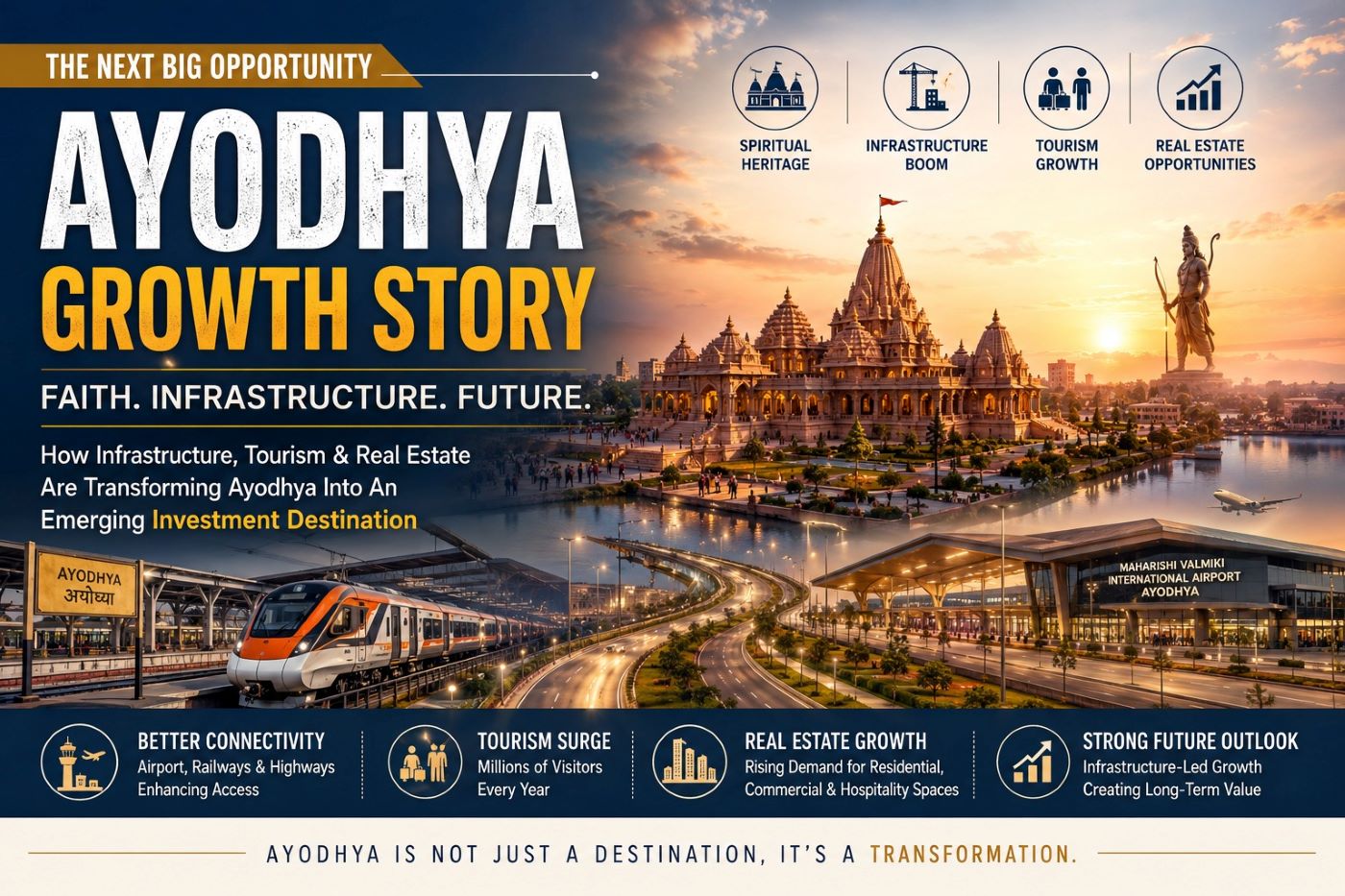
AYODHYA GROWTH STORY
How Infrastructure, Tourism & Development Are Transforming Ayodhya
For decades, Ayodhya was primarily known as one of India’s most important spiritual destinations. Today, the city is entering a new phase of transformation driven by infrastructure development, tourism expansion, hospitality growth, and rising investor attention.
The development surrounding Ram Mandir is not only reshaping the city’s cultural importance but also creating long-term economic opportunities across multiple sectors.
Ayodhya is gradually emerging as a major spiritual tourism and infrastructure-driven growth corridor in India.
Why Ayodhya Is Gaining National & Global Attention
The inauguration of the Ram Mandir has significantly increased national and international attention toward Ayodhya. Millions of devotees and tourists are expected to visit the city annually, creating demand for:
- Hotels
- Restaurants
- Transportation
- Retail businesses
- Rental accommodations
- Tourism services
This rising footfall is accelerating economic activity and encouraging both public and private sector investments.
Ayodhya’s transformation is now being compared to how major pilgrimage destinations evolve into tourism-led economic ecosystems.
Massive Infrastructure Development in Ayodhya
One of the biggest drivers behind Ayodhya’s growth story is large-scale infrastructure investment.
Key developments include:
1. Maharishi Valmiki International Airport
The airport has significantly improved domestic connectivity and is expected to support future tourism growth and business travel.
2. Railway Station Redevelopment
Modernized railway infrastructure is improving passenger experience and increasing accessibility for pilgrims and tourists.
3. Road & Highway Expansion
Enhanced road connectivity with major cities in Uttar Pradesh is improving transportation efficiency and supporting urban growth.
4. Smart City & Urban Beautification Projects
Riverfront development, improved lighting, wider roads, landscaping, and urban upgrades are transforming Ayodhya’s cityscape.
Infrastructure-led development often becomes the foundation for long-term real estate and commercial growth.
Tourism Growth Is Driving Economic Activity
Tourism remains one of the strongest pillars of Ayodhya’s future economy.
As visitor numbers rise, demand is increasing for:
- Hotels and hospitality projects
- Serviced apartments
- Retail outlets
- Food & beverage businesses
- Transportation services
This creates a multiplier effect across the local economy by generating employment, boosting business activity, and encouraging urban expansion.
The spiritual tourism sector in India has historically created strong economic ecosystems around cities with large-scale religious significance, and Ayodhya is expected to follow a similar trajectory.
Real Estate Opportunities in Ayodhya
As infrastructure and tourism grow together, investor interest in Ayodhya’s real estate market is also increasing.
Areas attracting attention include:
- Hospitality projects
- Studio apartments
- Commercial spaces
- Land parcels
- Tourism-oriented developments
Many investors believe that early-stage infrastructure growth can lead to long-term appreciation opportunities. However, careful research remains essential before making any investment decisions.
Important Factors Investors Should Consider
While Ayodhya presents significant long-term potential, investors should approach the market strategically.
Important considerations include:
- Legal verification of projects
- Developer credibility
- Connectivity analysis
- Tourism sustainability
- Infrastructure completion timelines
- Long-term demand fundamentals
Avoiding speculative decisions and focusing on research-based investing can reduce risks and improve long-term outcomes.
Ayodhya’s Future Outlook
- Ayodhya is gradually positioning itself as:
- A global spiritual tourism destination
- A hospitality growth hub
- An infrastructure-driven emerging city
- A culturally significant economic center
As government projects, tourism activity, and private investment continue to expand, Ayodhya’s development journey may become one of India’s most closely watched urban transformation stories over the coming decade.
Conclusion
Ayodhya is no longer viewed only through a religious lens. The city is evolving into a broader infrastructure, tourism, and investment growth story.
The combination of spiritual significance, government-backed development, rising connectivity, and hospitality demand is creating new opportunities across multiple sectors.
For investors, businesses, and observers alike, Ayodhya represents a city undergoing rapid transformation with long-term strategic importance.