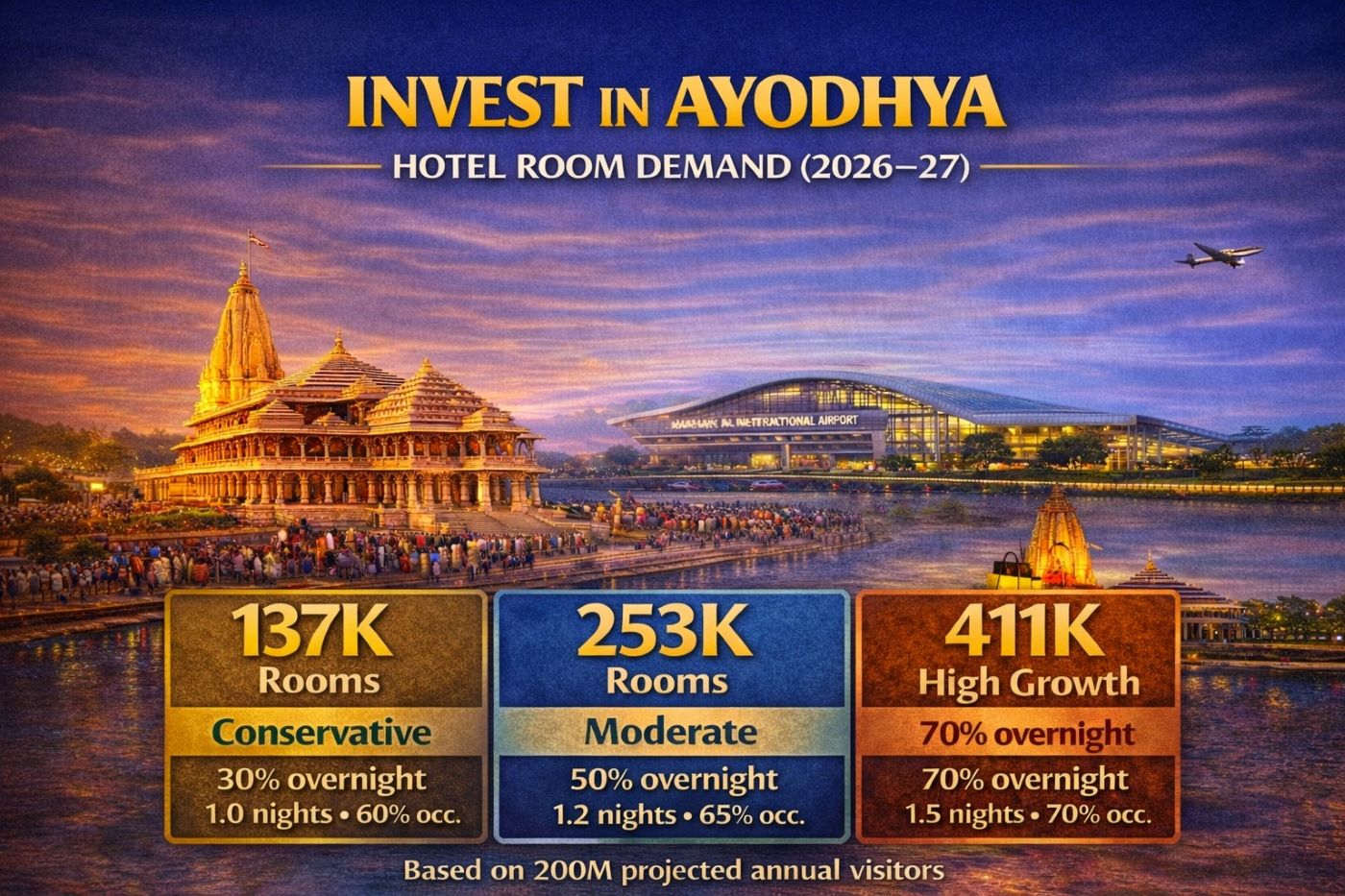
The transformation of Ayodhya into a global pilgrimage destination accelerated after the consecration of the Ram Mandir in early 2024. The impact on tourism has been unprecedented.
- 2023 Visitors: ~57.6 million
- 2024 Visitors: ~164.4 million (nearly 3× growth)
- 2025 Trend: Continued high inflow supported by festival tourism, improved connectivity, and airport operations , Official reports from the Uttar Pradesh government state that approximately 23 crore people visited Ayodhya in the first half of 2025.
This surge places Ayodhya among the highest footfall religious destinations in India, competing with cities like Varanasi and Tirupati in pilgrimage volume.
Projected Visitors (2026–2027)
Based on current infrastructure expansion and sustained religious tourism momentum, conservative projections suggest:
- 2026: 180–200 million visitors
- 2027: 200–230 million visitors
With expanded road, rail, and air connectivity, Ayodhya’s tourism growth appears structural rather than temporary.
Infrastructure Development Driving Growth
The development of Maharishi Valmiki International Airport has dramatically improved accessibility. New highways, widened temple corridors, and riverfront upgrades along the Saryu are further enhancing visitor experience.
Government-backed beautification, smart city projects, and tourism promotion campaigns are positioning Ayodhya not just as a pilgrimage stop — but as a full-scale religious tourism ecosystem.
For real estate investors, infrastructure-led growth significantly reduces long-term risk and increases property appreciation potential.
Impact on Ayodhya’s Hotel & Hospitality Industry
The hospitality sector is experiencing supply expansion to meet surging demand.
Key Developments:
- Radisson Hotel Group announced expansion plans in Ayodhya with new hotel projects targeting upscale pilgrims and corporate visitors.
- EasyMyTrip backed hospitality investments through Jeewani Hospitality projects.
- Mid-scale chains and regional operators are entering the market.
- Government-supported guest house and tourist accommodation projects are under development.
What This Means for Investors
- Average Daily Room Rates (ADR) Rising: High demand during festivals and weekends.
- Occupancy Levels Strong: Particularly near temple corridor and main ghats.
- Branded Hotel Entry Validates Market: Institutional confidence reduces risk perception.
Dozens of new hotels and guest houses are in pipeline stages (planning, construction, or announced). However, demand growth currently outpaces quality room supply — especially in the midscale and premium categories.
High-Potential Real Estate Segments in Ayodhya
- Branded Midscale & Premium Hotels
- Franchise or management partnerships with established operators offer strong yield potential.
- Serviced Apartments & Aparthotels
- Pilgrimage travelers often arrive in families or groups, increasing demand for larger stay formats.
- Budget Hotels & Dharamshala Redevelopment
- Upgrading traditional stay formats into structured hospitality assets can significantly increase ROI.
- Retail & F&B Near Temple Corridor
- High footfall translates into strong rental yields for shops, prasad outlets, restaurants, and souvenir markets.
- Land Banking Along Growth Corridors
Strategic parcels near airport road and outer ring connectivity may appreciate over 3–5 years.
Investment Risks & Considerations
While Ayodhya presents high-growth potential, smart investors must evaluate:
- Seasonality impact outside festival peaks
- Regulatory approvals and land-title clarity
- Competition from large hotel chains
- Infrastructure execution timelines
- Over-supply risk in low-budget segment
Why Ayodhya Is a Long-Term Structural Opportunity
Unlike short-term tourism spikes, Ayodhya’s growth is anchored in religious sentiment and national significance. The Ram Mandir ensures sustained pilgrimage demand for decades.
Religious tourism in India is one of the most recession-resilient segments. With over 80% of India’s population identifying with pilgrimage traditions, Ayodhya has entered a permanent high-demand cycle.
Additionally, international Hindu diaspora tourism is expected to increase steadily from 2026 onward.
Investment Outlook 2026–2027
- Continued visitor growth expected
- Rising hotel inventory but demand likely to absorb supply
- Capital appreciation in core zones
- Strong rental potential in hospitality-linked properties
Ayodhya is transitioning from a traditional pilgrimage town into a structured religious tourism economy.
For real estate investors seeking exposure to India’s fastest-growing spiritual tourism market, Ayodhya offers:
- High visitor volume
- Expanding infrastructure
- Institutional hospitality entry
- Long-term demand visibility
Conclusion
Ayodhya’s real estate landscape is undergoing a historic transformation. With 164 million visitors recorded in 2024 and projected growth into 2026–2027, the hospitality and commercial real estate sectors are entering a high-opportunity phase.
Investors who enter early — with proper feasibility studies and brand partnerships — stand to benefit from capital appreciation and recurring hospitality income.
Ayodhya is no longer just a pilgrimage city.
It is emerging as India’s most powerful religious tourism-driven real estate market.