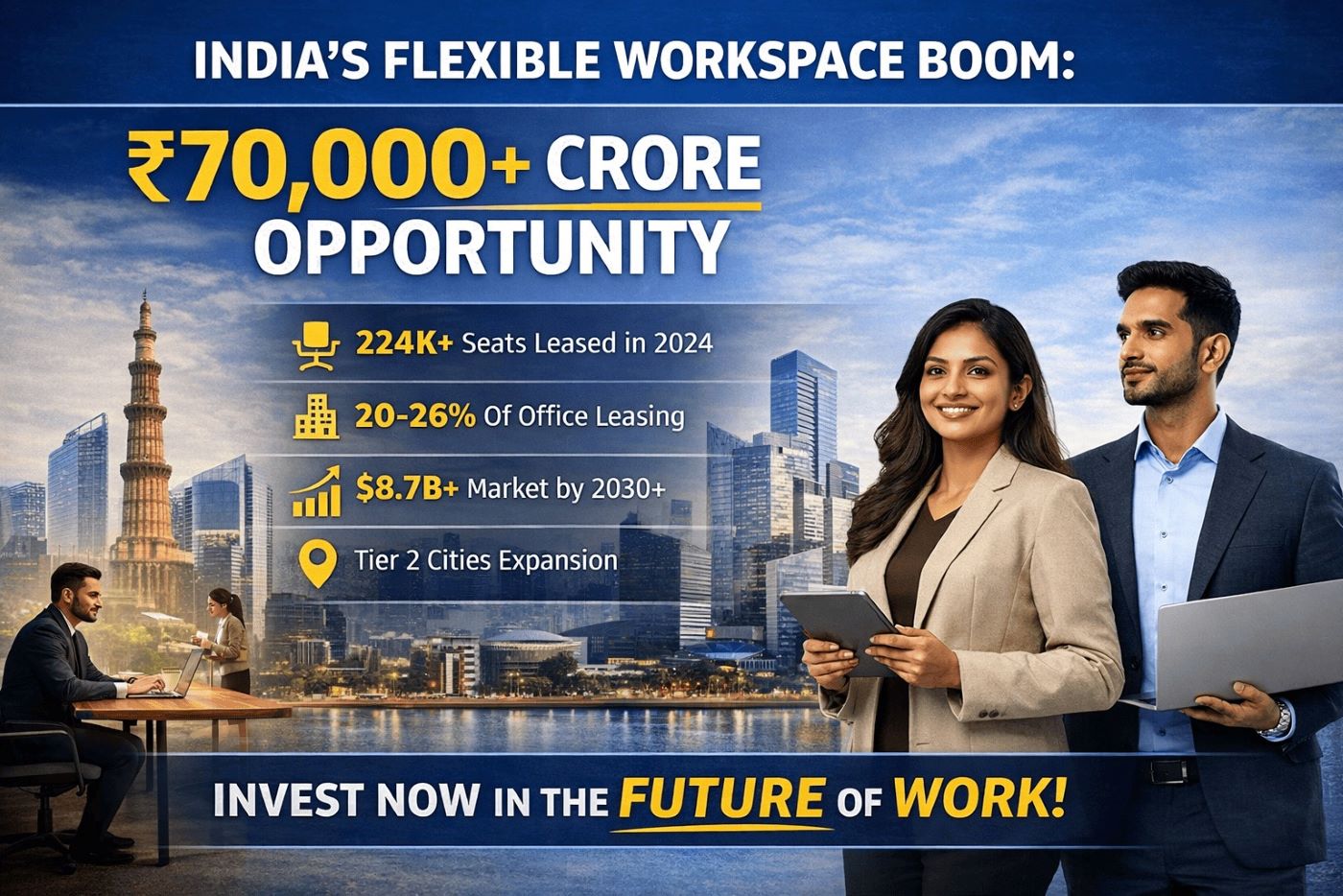
India’s office market is undergoing a structural transformation. Traditional long-term leases are being replaced by flexible workspaces, coworking hubs, and managed offices.
Driven by hybrid work culture, startups, and enterprise demand, flexible workspace is no longer an alternative—it is becoming the core of India’s commercial real estate ecosystem.
Flexible Workspace Market Data (2024–2025)
Market Size & Growth
- India coworking market:2024: ~$1.94 billion 2025: ~$2.08 billion
- Flexible office space market: 2025: ~$5.99 billion 2026: ~$6.81 billion
- Projected growth: CAGR of 13–20%+ till 2030
This makes India one of the fastest-growing flexible workspace markets globally.
- Supply & Stock Growth
- 2024: ~80 million sq ft
- 2025: ~79.7–85 million sq ft across top cities
- 2027: Expected to reach 100–125 million sq ft
India is now the largest flexible office market in Asia-Pacific
- Demand & Leasing Trends
- Flexible workspace share in leasing:
- 2024: ~20% of total office leasing
- Q4 2025: ~26.6% (highest ever)
- Seats leased in 2024:
- 224,000 seats (+44% YoY growth)
- Flexible space is now among the top occupier segments in India’s office market.
Key Demand Drivers
1. Hybrid Work Culture
97% employees and 98% employers prefer hybrid work in India
Companies need distributed, flexible office access
2. Startup & Freelance Economy
India’s startup ecosystem expected to create $1 trillion value by 2030
Demand for low-cost plug-and-play offices
3. Enterprise Adoption
Large corporates now use coworking for:
Satellite offices
Project-based teams
Expansion without CAPEX
4. Cost Optimization
Flexible offices reduce:
- Capex
- Lock-in leases
- Setup time
Emerging Trends (2024–2025)
1. Tier-2 & Tier-3 City Expansion
Cities like Jaipur, Indore, Lucknow, Kochi are becoming new flex hubs
Lower cost + rising talent pool = huge opportunity
2. Managed Office Model Growth
Enterprises prefer custom-built managed spaces
Higher margins than traditional coworking
3. GCC & MNC Demand
Global Capability Centers (GCCs) driving leasing demand
India becoming a global outsourcing + workspace hub
4. Tech-Enabled Smart Offices
IoT-enabled offices
AI-based space optimization
App-based bookings
5. Rise of On-Demand Workspaces
- Hourly / daily rentals
- Meeting room economy
- Subscription-based office access
Investment Opportunities in Flexible Workspace
1. Commercial Real Estate Investors
- Convert buildings into managed flex spaces
- Higher yield vs traditional leasing
2. Franchise & Operator Models
- Partner with brands like coworking operators
- Revenue-sharing model
3. Small Investors
Invest in:
- Studio offices
- Fractional commercial assets
- Business centers
Future Outlook (2026–2030)
- Market Forecast
Market size expected to reach:
- $2.9B+ by 2030 (coworking)
- $8.7B+ by 2031 (flex office market)
- 8.5% (2025) → 10.5%+ (2027)
Key Predictions
1. Flex Will Become Core Office Model not optional anymore—companies will adopt hub + spoke model
2. Tier-2 Cities Will Drive Growth Next wave of expansion beyond metros
3. Enterprise Dominance Large companies will account for major demand share
4. Asset-Light Real Estate Model Developers will shift to revenue-sharing vs fixed rent
5. Integration with Real Estate Investments
Residential + workspace ecosystems
Mixed-use developments
Conclusion:
A High-Growth Investment Theme
Flexible workspace is not just a trend—it is a structural shift in India’s commercial real estate.
With:
- Strong demand growth
- Enterprise adoption
- Hybrid work culture
- Expansion into Tier-2 cities
The sector offers massive opportunities for investors, developers, and consultants between 2026–2030.