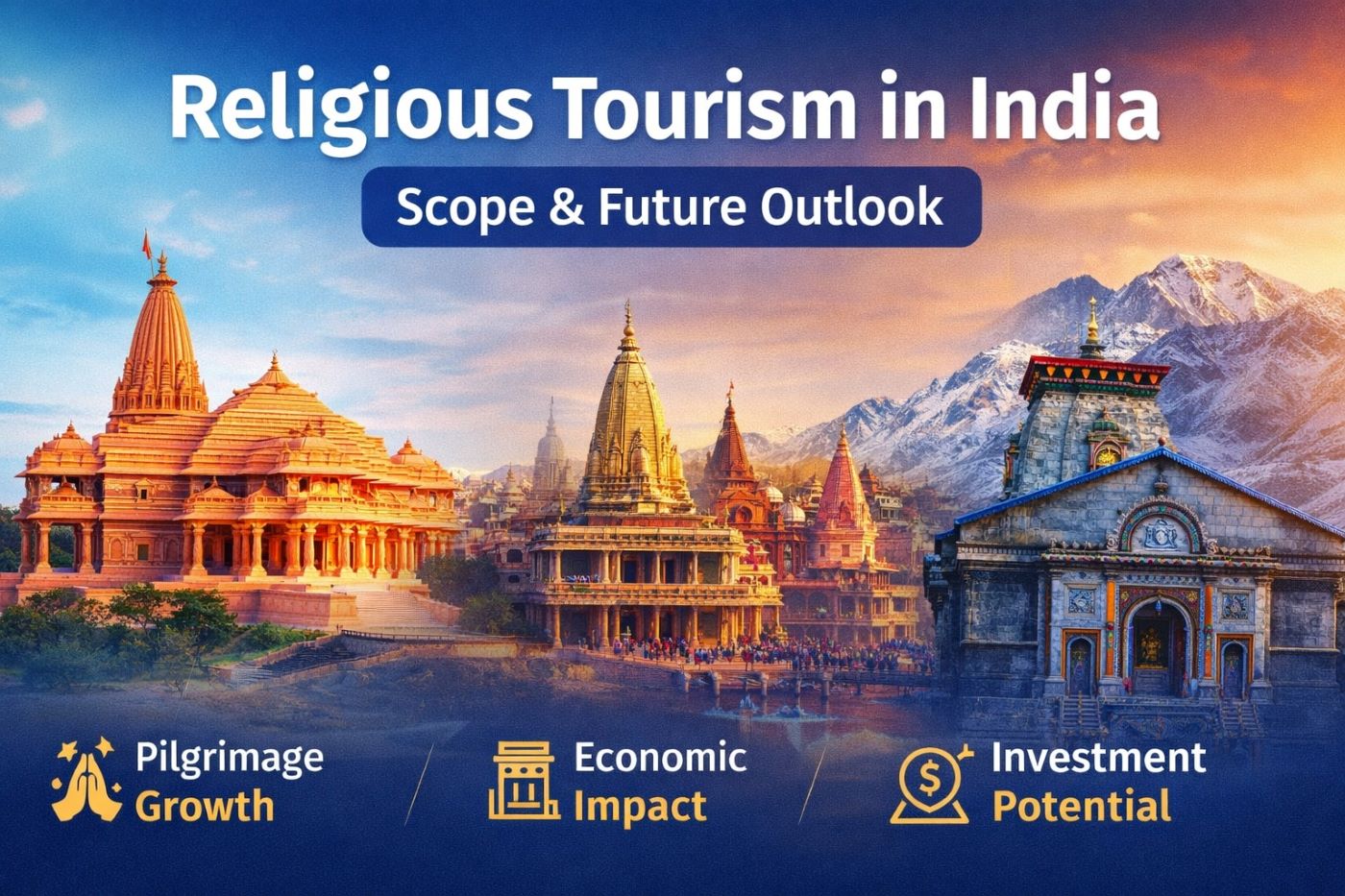
India is one of the world’s oldest civilizations and home to multiple religions, including Hinduism, Islam, Christianity, Sikhism, Buddhism, and Jainism. With thousands of temples, mosques, gurudwaras, churches, and monasteries, religious tourism in India is not just a cultural phenomenon — it is a powerful economic engine.
In recent years, pilgrimage tourism has emerged as one of the fastest-growing segments of India’s travel and hospitality industry.
Why Religious Tourism is Growing Rapidly
1. Cultural & Spiritual Significance
India attracts millions of domestic and international pilgrims every year. Major destinations include:
Kashi Vishwanath Temple
Ram Mandir Ayodhya
Vaishno Devi Temple
Golden Temple
Tirupati Balaji Temple
These destinations witness year-round footfall, unlike seasonal leisure tourism.
2. Massive Domestic Demand
India’s middle class expansion, improved road connectivity, and affordable air travel have significantly boosted short spiritual trips and weekend pilgrimages.
Events like the Char Dham Yatra, Kumbh gatherings, and temple festivals generate huge tourism cycles annually.
3. Government Infrastructure Push
The Government of India has launched multiple schemes to boost spiritual tourism:
- PRASHAD Scheme (Pilgrimage Rejuvenation and Spiritual Heritage Augmentation Drive)
- Swadesh Darshan Scheme
- Corridor redevelopment projects (Ayodhya, Kashi, Ujjain)
- Expressways & airport connectivity (Jewar, Ayodhya, Varanasi expansion)
The redevelopment of pilgrimage corridors has significantly enhanced visitor experience and urban infrastructure.Economic Impact of Religious Tourism
Religious tourism contributes to:
Hotel & hospitality growth
Local employment generation
MSME development
Handicraft & temple economy expansion
Infrastructure-led real estate appreciation
The Temple Economy in India generates billions annually through donations, hospitality, transport, retail, and local services.
For example, Ayodhya's transformation post the Ram Mandir development has triggered rapid real estate activity and hospitality investment.
Emerging Religious Tourism Hubs
Ayodhya – A New Global Pilgrimage Centre
With the development of the Ram Temple and new airport infrastructure, Ayodhya is expected to attract millions of domestic and international tourists annually. Hospitality chains, township projects, and retail spaces are expanding rapidly.
Varanasi – Spiritual Capital of India
The Kashi Vishwanath Corridor project has transformed the ghats and temple surroundings, increasing tourist capacity and improving infrastructure.
Char Dham Circuit – Uttarakhand
Improved highways and all-weather road projects are expected to further increase footfall in Kedarnath, Badrinath, Yamunotri, and Gangotri.
Scope of Religious Tourism in India
1. Year-Round Demand Stability
Unlike leisure tourism, pilgrimage tourism remains stable even during economic slowdowns.
2.International Spiritual Tourism
India attracts Buddhist tourists from Southeast Asia, Hindu diaspora from across the world, and yoga & meditation seekers globally.
3. Real Estate & Investment Potential
Religious destinations are witnessing:
- Hotel and resort investments
- Budget accommodation demand
- Retail & prasad market expansion
- Township developments near pilgrimage corridors
Cities with new airports and expressways will see accelerated commercial growth.
Future of Religious Tourism in India (2026–2035 Outlook)
The future outlook is highly promising due to:
Rising spiritual awareness among youth
Digital booking platforms for pilgrimages
Better law & order and infrastructure
Government branding of heritage circuits
Increased NRI participation in temple donations
Experts predict that religious tourism could become one of the largest contributors to India’s domestic travel market over the next decade.
Key Investment Opportunities
- Budget hotels near temple corridors
- Spiritual retreat centers
- Heritage homestays
- Religious tour packages
- Transport & logistics services
- Retail & devotional product chains
For real estate investors, airport-linked pilgrimage cities offer long-term appreciation potential.
Conclusion
Religious tourism in India is no longer limited to faith-driven travel. It has evolved into a structured economic sector backed by infrastructure development, urban transformation, and government initiatives.
With growing domestic demand and global spiritual interest, India’s pilgrimage destinations are set to become major tourism and investment hubs in the coming decade.
The combination of faith, infrastructure, and economic planning makes religious tourism one of the strongest long-term growth sectors in India.