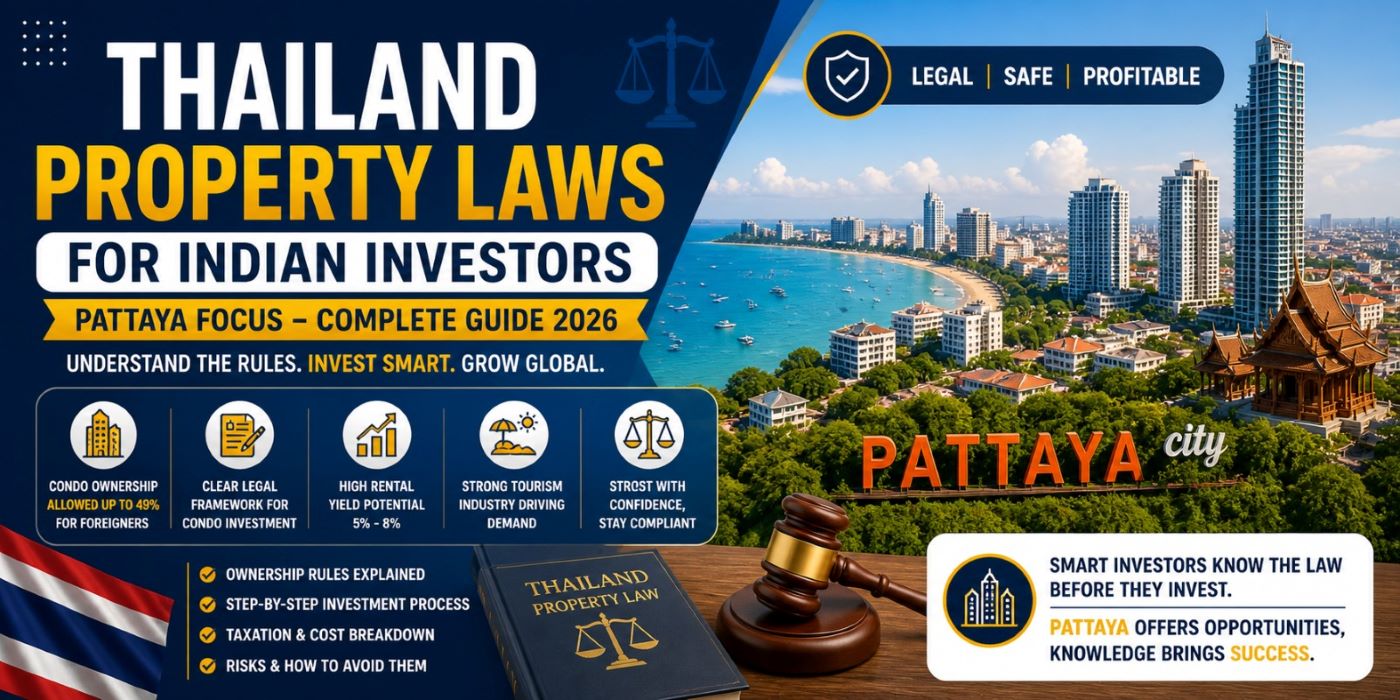
Thailand Property Laws for Indian Investors (Pattaya Focus)
Thailand is emerging as a high-potential, affordable international real estate market—especially for Indian investors looking to diversify globally.
Among all cities, Pattaya stands out due to its tourism-driven rental demand, low entry cost, and growing infrastructure.
But before investing, you must understand one critical factor:
Thailand has strict property ownership laws for foreigners.
Why Pattaya is Attracting Indian Investors
Affordable property prices (60 Lalkhs onwards)
Rental yield potential of 8%–10%
Strong tourism-driven occupancy
Easy entry compared to Dubai
Ideal for first-time international investors
Can Indians Buy Property in Thailand?
Yes—but with restrictions.
Indian investors cannot directly own land in Thailand, but they can legally own condominiums under specific rules.
Understanding this distinction is critical to avoid legal issues.
What Can Indians Legally Own?
Condominiums (Fully Allowed)
- Up to 49% of a building can be foreign-owned
- Full ownership rights
- Can rent, sell, or transfer
This is the most common and safest investment route
Land & Villas (Restricted)
- Foreigners cannot directly own land
- Villas can only be purchased via:
- Long-term lease (30 years)
- Thai company structure (complex & risky if not structured properly)
Avoid risky structures without expert legal guidance
Legal Structure for Investment
Safe options for Indian investors:
- Freehold condominium ownership
- Leasehold agreements (30-year renewable)
Avoid:
- Proxy ownership (illegal)
- Unverified developers
Legal clarity is key to protecting your investment
Cost Breakdown for Buying Property in Pattaya
Always calculate net returns after costs
Cost Type | Approximate Value |
Property Price | 60 L- 1 Cr+ |
Transfer Fee | 2% |
Maintenance Fee | Annual |
Legal Fees | Variable |
Rental Yield & ROI in Pattaya
- Rental Yield: 8%–10%
- Short-term rental (Airbnb style) can increase returns
- High demand due to tourism
- Best suited for holiday rental income
Taxation for Indian Investors
In Thailand:
- Rental income is taxable
- Withholding tax may apply
In India:
- Global income must be declared
- Double Taxation Avoidance Agreement (DTAA) applies
- Always consult a tax advisor for optimized structuring
Key Risks Investors Must Understand
- Legal ownership confusion
- Developer reliability
- Oversupply in some areas
- Currency fluctuation
This is where most investors make mistakes
Expert Investment Strategy (Very Important)
- Smart investors in Pattaya follow this approach:
- Invest only in freehold condos
- Choose prime tourist locations
- Focus on rental demand zones
- Avoid “too cheap” deals
- Strategy matters more than price
Final Verdict
Pattaya offers a low-cost entry into international real estate, but it requires clear legal understanding.
- The safest strategy:
- Invest in condos
- Avoid legal shortcuts
- Focus on rental-driven locations
When done right, Pattaya can deliver steady passive income + global diversification